

Working Class Art
For too long, working-class art has faced many barriers in the art world. For various reasons, the term ‘working class’ and ‘Northern’ are carelessly lumped together.
Talented individuals and unique perspectives are often shamelessly overlooked. But that’s all changing thanks to the internet.
New platforms can finally shine a spotlight on the incredible artwork of working-class artists who choose not to live in London or surrounding regions – these artists reside in an area known as ‘The North’.
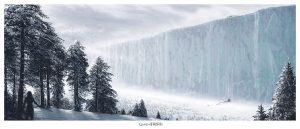
Think of the wall in Game of Thrones and that pretty much sums up the divide.
Let’s address the elephant in the room – when you hear “working class art,” what’s the first thing that comes to mind? Is it dreary, bleak, and uninspired? Well, my friend, you couldn’t be more wrong.
Northern artists bring a fresh outlook to the art world, infusing their experiences and personalities into their creations. From the North of England, urban artists and rural creatives capture the essence of class, society and modern-day culture. New voices shed light on issues that often go unnoticed. Work that is as diverse as it is fascinating.
The beauty of working-class art lies in its authenticity and honesty. It is a reflection of the struggles and triumphs of everyday life, unapologetic, bold and unafraid to tackle the tough issues.
Northern Working-Class Art
Whether it is the hauntingly beautiful landscapes of the North, the gritty realism of urban life, or the vivid colours and shapes of abstract art, northern working-class artwork has it all.
From intricate paintings to thought-provoking sculptures, northern artwork defies conventions and challenges the very notion of what art can be. Artists have a unique ability to capture the essence of their surroundings and translate it into something truly special.
Their artwork is a testament to the resilience and creativity of the human spirit, a reminder that incredible things come from unexpected places and harsh realities.
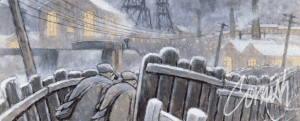
In 2020, the Bowes Museum in County Durham extended an exhibition of work by the late Norman Cornish, after record numbers wanted to view his art. Norman was a miner for 33 years working in the pits. He always made time for his art and in 1959 he began a 21-year association with The Stone Gallery in Newcastle.
I didn’t have a lot of time, but I had to paint… it’s an itch that you have to scratch.
You can visit and buy work at the official website for Norman Cornish by clicking here.
Is Art Affected by the Class System?
Ah, the class system. That wonderful British institution that has been with us for, well, forever. From domestic help and farmers in wellies to the Volvo driving, polo-necked middle class; topped by the bumbling upper class who consider themselves to be above us, just imagine Boris or Prince Andrew… I know – let’s not.
It’s no secret that society’s inequalities and class divisions affect every aspect of our lives, but what about art? It turns out that the class system has a significant impact on the art world. Working class artists, in particular, face unique barriers that prevent them from gaining the recognition they deserve. Their art is overlooked perpetuating the notion that working class art is inferior. According to Arts hub in an article published on the 10th of January this year, only 8% of UK artists come from a working-class background. The biggest contributing fact to that appalling statement is low income.
I heartily disagree with the above. I think the number is much, much higher but the artists involved probably work full time to support their ‘hobby’. Consequently, their first response would not be to call themselves an artist. With such a horrible lack of support from the government it is a wonder there are any, but like Norman Cornish said, “It is an itch that must be scratched.” Here in the north we say, ‘where there’s a will, there’s a way,’ somehow, we find the means to do it because we love it.
But here’s the thing – working class art is just as valid and valuable as any other form of art. In fact, it often provides a fresh look at the world, free from the constraints of traditional artistic norms. Art is used to address issues that affect communities, such as poverty, unemployment and social inequality. They create powerful, thought-provoking pieces that challenge our preconceptions and force us to confront uncomfortable truths. And, most are self-taught.
The art world is notoriously elitist and hierarchical, with certain types of art being deemed more “worthy” than others. Working class artists are often excluded from galleries and exhibitions, which limits their exposure and opportunities. But here’s the good news – that’s all changed. Thanks to initiatives and organizations that support working class artists, such as the Northern Artist Prize, and of course, the internet. More and more people are starting to appreciate the value of working-class art.
Does a Gallery Ensure Success?
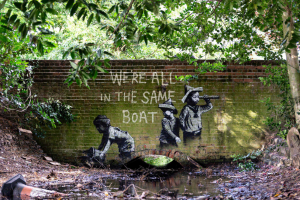
Banksy’s message says it all. No gallery or social hierarchy will ever restrain his creative output.
Note to pest control – I’m not benefiting financially from this article.
To feast your eyes on this and other brilliant pieces click here
The Resilience of Older Northern Artists
As I delve into the world of working-class art, I can’t help but be in awe of the older northern artists who have dedicated their lives to their craft. These artists have weathered the storms of life, persevered through adversity and continued to create art that speaks to the soul.
It is through their resilience that we gain an insight into the unique culture of the North of England. Their experiences have given rise to artwork that is both raw and beautiful.

https://www.historic-uk.com/CultureUK/LS-Lowry/
Lowry dedicated his time to portraying many bleak, looming, industrial structures populated by crowds of working men and women. I am no expert but I know what the paintings say to me as a Northerner. Especially in this particular example, your eye is drawn to the two happy guys who might be in a hard situation but their spirit is not broken. Despite the overbearing overlords.
“Art is not what you see, but what you make others see.” – Edgar Degas
Through their art, these older northern artists have made us see the world through a different lens. They have brought attention to social issues and shed light on the human experience, leaving an indelible mark on the art world. Not least that there is both humour and beauty, it isn’t all depressing and dark.
Phil George is another artist who veered away from expectations because of his art. His humour shows in this painting of Phil and his dog Ribbon. His work has travelled as far as Australia.
This painting made me laugh because I remember someone from my childhood who religiously walked the dog and came home a lot happier an hour later!
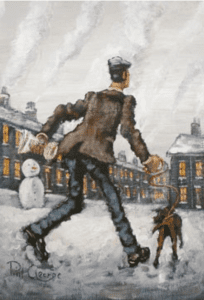
Phil is represented by John Nicholson Fine Art
“’My current paintings draw inspiration from the Industrial landscape as well as the awesome natural beauty of our landscape, memories of my childhood, and being slightly at odds with the 21st Century.”
Geoff Kersey’s father worked in the steel industry but Geoff knew he would like to be some sort of artist. Despite all the odds he held on to his dream and is now a well-known watercolour artist, writer and tutor. His work is a far cry from the heavy industrial paintings that are the stereotype people jump to when they think of northern art. Instead you can feast your eyes on the outstanding beauty he sees and translates.
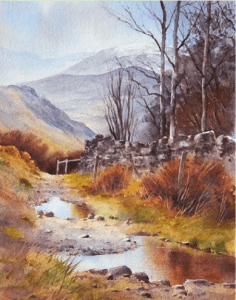
Footpath to Howtown – Geoff Kersey
You can learn watercolour painting with Geoff by clicking on this link
It is important that we celebrate their achievements and recognize the value of their contributions. We cannot let their talent and hard work fade into obscurity. They are a testament to resilience.
Breaking Down Barriers
Because you’re born into a certain social class or area of England, don’t restrict yourself from pursuing your artistic dreams.
Many websites provide a level playing field for all artists, regardless of their background or social standing. Everyone deserves the chance to showcase their creative talents and reach a wider audience.
These new online platforms collaborate with galleries, curators, and other industry professionals to connect artists with potential buyers and supporters. Some provide resources and training to help artists develop their skills and build their careers. I’ll write about the best in another article so watch this space.
Art as a Means of Social Commentary
As a northern lass myself, I’m a huge fan of the incredible artistry that comes out of the North of England.
From the gritty realism of the Manchester school to the whimsical landscapes of the Lake District, vibrant street art of Newcastle or the haunting photographs of industrial Teesside, northern art showcases the diversity of this magical region with a strong focus on human experience. And let’s not forget the legendary artists who have called the North home, from L.S. Lowry to David Hockney.
Working class artists have always had to be a little bit tougher and a little bit more fearless. It’s not just about what looks good on a canvas; it’s about what speaks to our souls. Let’s be honest, we could all benefit from more social commentary these days that is direct and holds nothing back.
“Art should comfort the disturbed and disturb the comfortable.” – Cesar Cruz
It’s a call to action, inspiring us to stand up for what we believe in. A reminder that we are all in this together, regardless of our class or background. The celebration of our humanity, our resilience, and our ability to create beauty in the face of adversity.
So, the next time you see a piece of working-class art, don’t just admire it for its aesthetics. Take a moment to reflect on the message behind it. Let it move you, challenge you, and inspire you to make a difference. Because that’s what true art is all about.
“The North is just different. There’s a passion and authenticity that shines through in the art created here. It is an accurate representation of who we are. We understand raw emotions and the poorest man would give the shirt off his back to help another.”
Not so Grim Up North
Artists from the north are a diverse and talented bunch. They confront societal issues head-on, creating thought-provoking pieces that challenge traditional notions of art. And yet, they are often pigeonholed into a narrow category, overlooked and undervalued by the mainstream art world.
Some of the finest wildlife and animal artists in the world, live and work in the North of England.
For example Gordon Corrins from Scotland
https://www.facebook.com/gordon.corrins/
And Bonny Snowden from sunny Yorkshire (It’s always sunny when you are in touch with Bonny).

https://www.facebook.com/BonnySnowdonAcademy/
Final Thoughts
There is hope on the horizon. Slowly but surely, we are breaking down stereotypes and redefining the art world.
“Art should be a reflection of society, and working-class art is no exception. It speaks to the everyday struggles and triumphs of real people, making it all the more powerful.”
Art encompasses all. From the gritty urban landscapes of the inner city to the idyllic countryside vistas of the rural working class. There is no shortage of inspiration or creativity. And yet, these artists are still have their work diminished by preconceived notions and misconceptions.
So, challenge these stereotypes and embrace the fact that winter is coming and we will break down that wall. Let’s continue to support and uplift, crush the significant barriers in the art world, and ensure talent continues to thrive for generations to come.
- Individuals and institutions can actively seek out and showcase the artwork of these artists, whether through exhibitions, publications, or online platforms. Working class artists are excluded from galleries and exhibitions. This limits their exposure and opportunities.
- Support initiatives and organizations that aim to uplift working class artists. From funding and mentoring programs to artist residencies and training workshops, these efforts can provide invaluable support and resources for artists to advance their careers and hone their craft.
Thank you for reading, please visit the artists I have mentioned.
And finally, something my dad said to me as we drove along country lanes in the cattle-wagon,
“It’s not grim up North our Jill, we just let them think it is so they don’t all move here”
God I miss him x